Giant Cell Tumour Treatment

  1. Home
  2. Giant Cell Tumour Doctor in Delhi
Giant Cell Tumour Treatment in Delhi

Giant Cell Tumour Treatment in Delhi & Ghaziabad

MS ENT

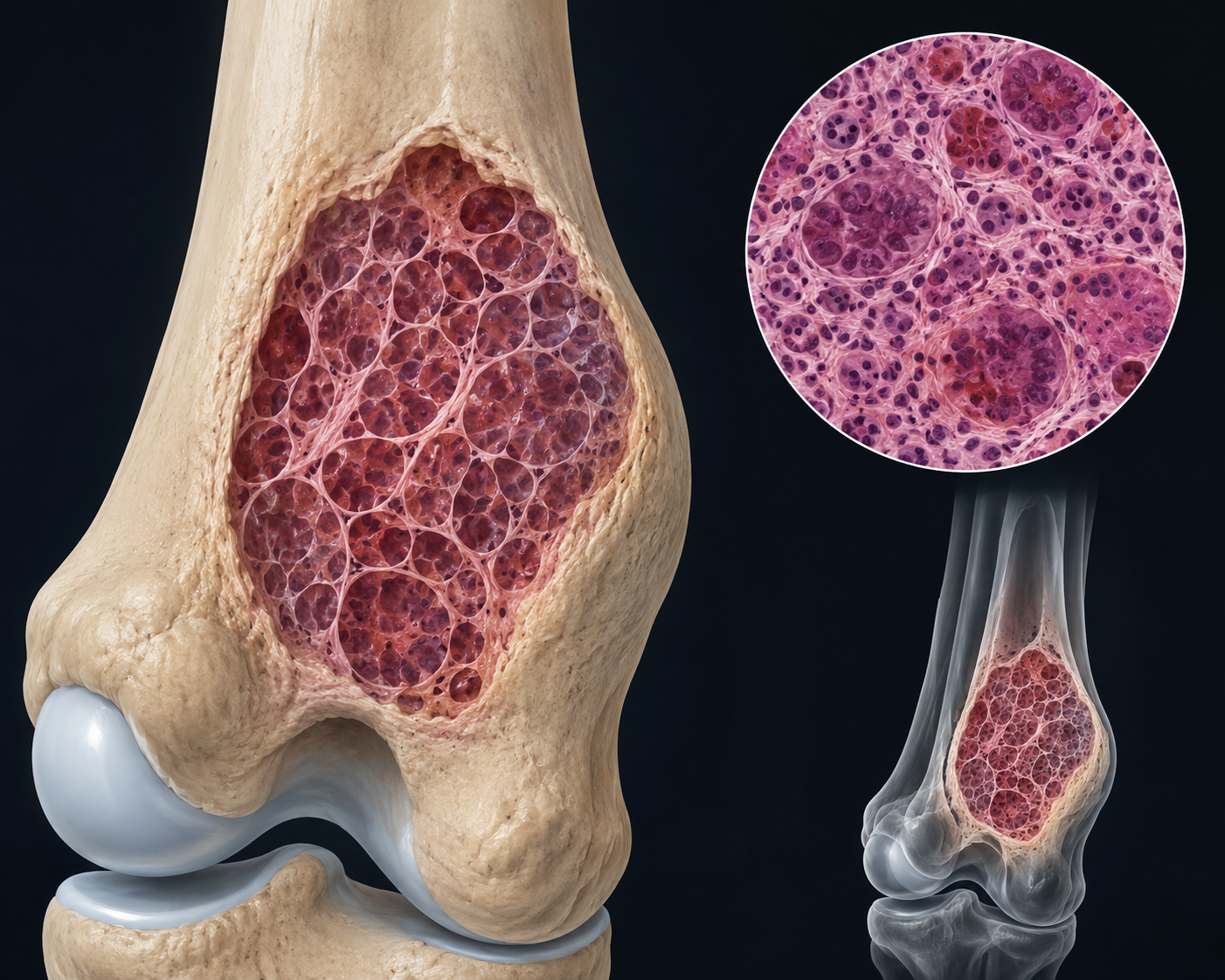
Giant cell tumour of bone is a locally aggressive tumor that most commonly affects the ends of long bones, such as around the knee, wrist, or shoulder. While it is usually benign, it can cause significant bone destruction and tends to recur if not treated properly, making early diagnosis and precise surgical management essential. If you are searching for an experienced giant cell tumour doctor in Delhi or a trusted giant cell tumour specialist in Delhi, Dr. Vivek Verma provides expert care for patients with giant cell tumour in Delhi and Ghaziabad. As a skilled giant cell tumour surgeon in Delhi, he offers advanced giant cell tumour treatment in Delhi through precise, function-preserving surgical techniques, ensuring patients from both Delhi and Ghaziabad receive effective care that minimizes the risk of recurrence.

Surgery

  • Objective: Completely remove the tumor while preserving joint function and minimizing the risk of local recurrence, which is a key concern with giant cell tumours.
  • Techniques:
    • Intralesional Curettage: Removes the tumor from within the bone cavity, followed by treatment of the cavity walls to reduce recurrence risk. This is the most common approach for giant cell tumour treatment in Delhi and Ghaziabad.
    • Adjuvant Treatment of Cavity: Techniques such as high-speed burring, phenol application, or cryotherapy are used after curettage to destroy residual tumor cells.
    • Bone Grafting or Cement Filling: The cavity left after curettage is filled with bone graft or bone cement to restore structural strength.
    • Wide Resection: Considered for aggressive or recurrent tumours, or when the joint is severely damaged, followed by reconstruction to restore function.
    • Joint-Preserving Reconstruction: Used whenever possible to maintain mobility and long-term joint function, an approach patients travelling from Ghaziabad and across Delhi frequently seek out.

Medical Therapy

  • Denosumab: A targeted medication that can shrink certain giant cell tumours before surgery or manage cases where surgery carries high risk, such as tumours near critical structures.
  • Role in Treatment Planning: May be used to reduce tumor size, making surgery less extensive and function preservation easier.

Radiation Therapy

  • Role: Reserved for rare situations where the tumor is located in a surgically inaccessible area, such as the spine or pelvis, or when surgery is not a safe option.

[Managing Recurrence]

  • Giant cell tumours have a notable tendency to recur, particularly after curettage alone, which is why adjuvant treatments and close follow-up are essential parts of care.
  • Recurrent tumours may require more extensive surgery, such as wide resection, to achieve long-term control.
  • Grade I (Latent): Slow-growing, well-contained tumours usually treated with simple curettage and bone grafting, with a low recurrence rate.
  • Grade II (Active): More locally aggressive tumours requiring curettage with adjuvant treatment, such as burring or cryotherapy, to reduce recurrence risk.
  • Grade III (Aggressive): Tumours with cortical breakthrough or soft tissue extension, often requiring more extensive surgery, such as wide resection, followed by reconstruction.
  • Malignant Giant Cell Tumour: A rare, aggressive subtype requiring wide surgical resection, and in select cases, chemotherapy or radiation as part of the treatment plan.

For advanced, recurrent, or difficult-to-treat giant cell tumour cases, palliative care focuses on symptom relief and maintaining quality of life, including:

  • Pain management through medications or targeted palliative radiation.
  • Denosumab therapy to control tumor growth when surgery is not a safe or viable option.
  • Physical and occupational therapy to help maintain joint mobility and daily function.
  • Supportive care coordinated between Delhi and Ghaziabad based on the patient's convenience.
  • Regular imaging, such as X-rays or MRI, to monitor for local recurrence, especially within the first two to three years after treatment.
  • Physiotherapy to restore joint strength, range of motion, and function after surgery.
  • Long-term monitoring, since recurrence can occur even several years after initial treatment.
  • Patients from both Delhi and Ghaziabad are supported with a structured follow-up schedule to ensure early detection of any recurrence.

Giant cell tumor of bone is generally favorable with complete surgical removal and appropriate adjuvant treatment. While recurrence is possible, most patients achieve good long-term joint function and a return to normal activity with timely, well-planned treatment.

OUR APPROACH

We keep patient's experience as our central focus.

With a strong foundation of integrity and sincerity, we adopt a transparent, inclusive
and flexible approach, even as we nourish our spirit of continuous learning that enables us to enrich and enhance our service delivery to careseekers.

Our Mission

To adhere to courtesy, compassion and commitment and integrate cutting-edge ENT medical care for the greater good of humanity.

Our Vision

To contribute to build a healthier community, nation and world by facilitating premier ENT healthcare that is accessible to all.

Our Value

Always prepared to go the extra mile, and offer nothing less than the best to each of our patients; we strive to reach excellence by surpassing patrons expectations while adding value to each of our services

OUR PARTNERS

Partnering with top experts and organizations

OUR EXPERTISE

Certified and experienced coaching

Choosing us means partnering with experienced coaches who are dedicated to unlocking your potential.

Profit Upscale
0 %

Maximizing growth through strategic profit enhancement.

Years Experience
0 +

Over a decade of proven industry expertise for your business.

Expert Solutions
0 %

Delivering tailored solutions to meet your business needs.

Industry Mastery
0 +

Leading the way with unmatched industry expertise.

WHY CHOOSE US ?

Personalized coaching tailored to your needs

We understand that no two clients are the same. That’s why we create personalized coaching plans designed to address your specific challenges and goals. Whether you’re focusing on personal growth or business development, our tailored approach ensures you get the exact guidance you need to succeed.

Client Success Rattings
0%
Projects Completed Ratio
0%

Watch our coaching videos for practical tools

What is a giant cell tumour and how is it diagnosed?

A giant cell tumour is a locally aggressive bone tumor that usually develops near a joint. It is diagnosed through imaging tests like X-ray or MRI, followed by a biopsy to confirm the diagnosis.

Who is the best giant cell tumour doctor in Delhi and Ghaziabad?

Dr. Vivek Verma is an experienced giant cell tumour doctor treating patients from both Delhi and Ghaziabad, offering personalized surgical treatment plans aimed at preserving joint function.

What is the main treatment for giant cell tumour of bone?

Surgery, primarily intralesional curettage followed by adjuvant treatment of the cavity, is the main treatment. In select cases, medication like denosumab or wide resection may be recommended.

Can giant cell tumour come back after treatment?

Yes, giant cell tumours have a tendency to recur, particularly after curettage alone. Regular follow-up imaging helps detect any recurrence early so it can be treated promptly.

Is joint function preserved after giant cell tumour surgery?

In most cases, yes. Techniques like curettage with bone grafting or joint-preserving reconstruction are used specifically to maintain movement and function after tumor removal.

Do I need to travel to Delhi if I live in Ghaziabad for giant cell tumour treatment?

No, Dr. Vivek Verma provides the same advanced level of giant cell tumour treatment to patients from Ghaziabad as those in Delhi, ensuring convenient access to specialized surgical care.